How to Choose a Bib for Baby-Led Weaning (What Actually Matters)
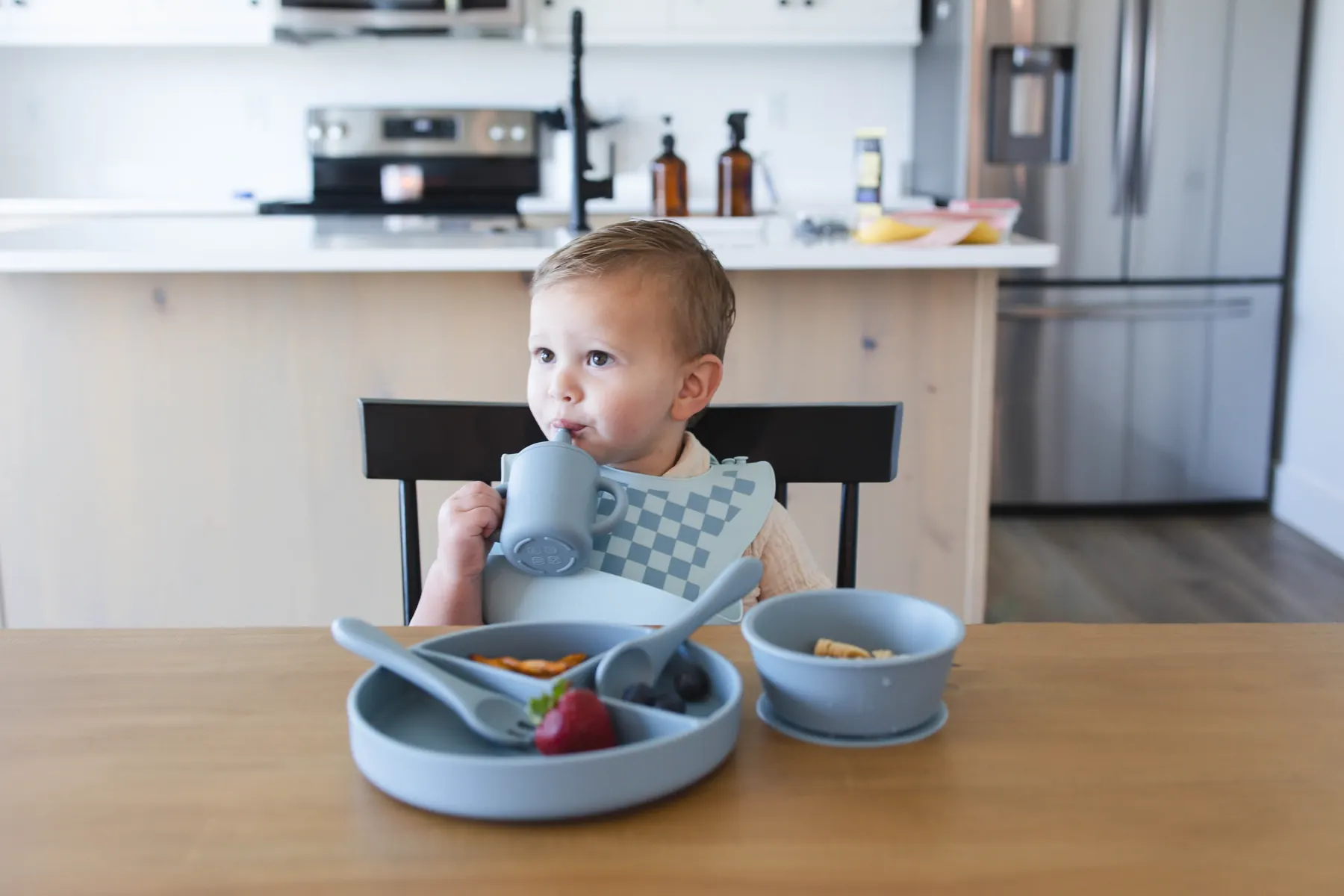
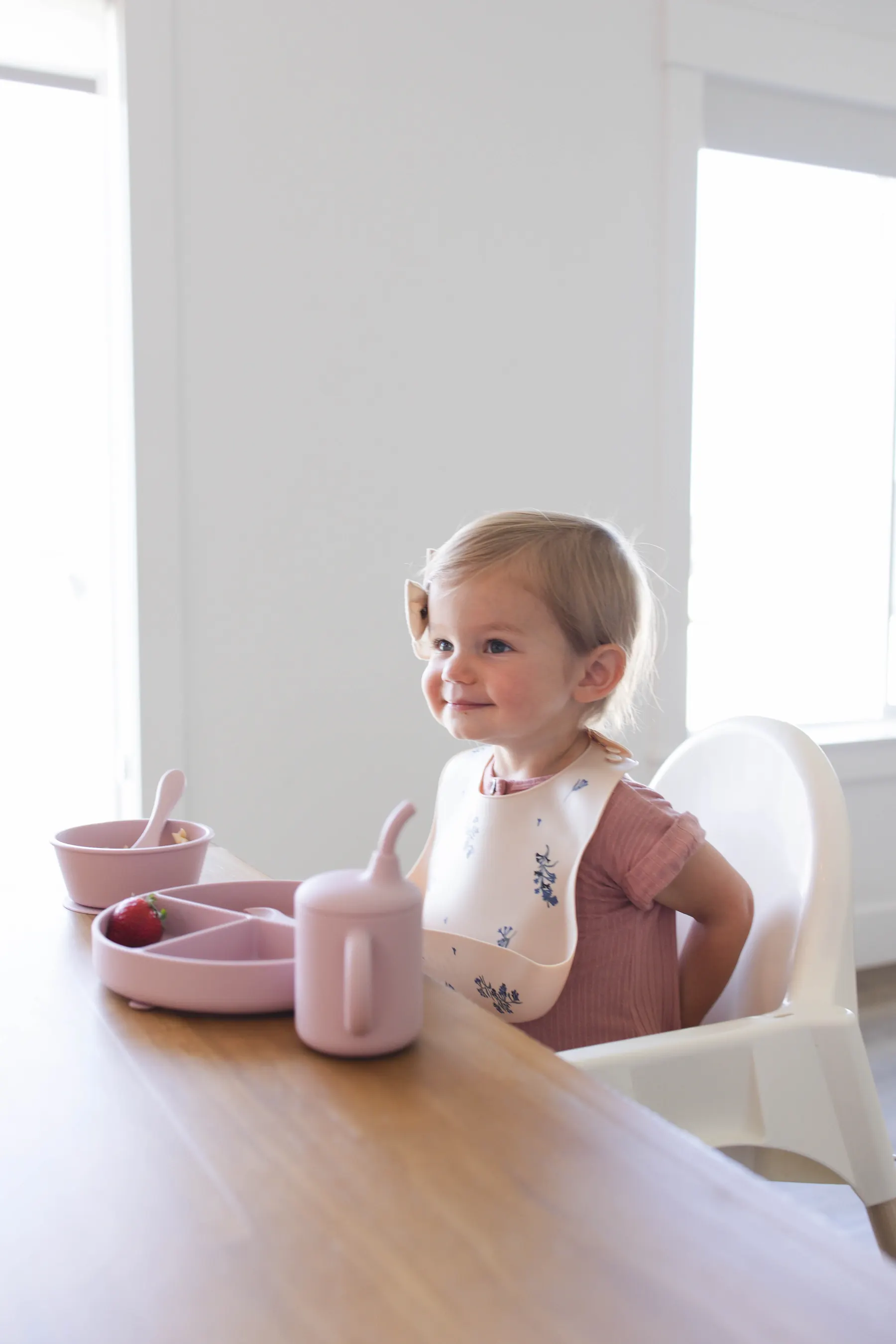
Baby-led weaning is messy by design. What to look for in a BLW bib: a pocket that stays open, waterproof material and an adjustable neck.
The short version
- Baby-led weaning puts the food in your baby's hands, so the mess lands lower and wider than with spoon-feeding.
- The single most useful feature is a pocket that stays open on its own — floppy pockets fold flat and catch nothing.
- Look for a waterproof material that rinses clean, an adjustable neck and something your baby can't easily pull off.
- Silicone bibs cover most meals. A long-sleeved smock is worth adding for the messiest foods.
Baby-led weaning (often shortened to BLW) skips the purée-and-spoon stage and lets babies feed themselves soft, appropriately sized pieces of real food from the start of solids. It's a lovely way to learn — and spectacularly messy. Food gets squeezed, dropped, smeared and launched, and very little of it travels in a straight line.
That changes what you need from a bib. A tiny cloth bib designed to catch a dribble of purée simply isn't built for a baby who is gripping a steamed broccoli floret in each fist. Here's what actually matters.
1. A pocket that holds its shape
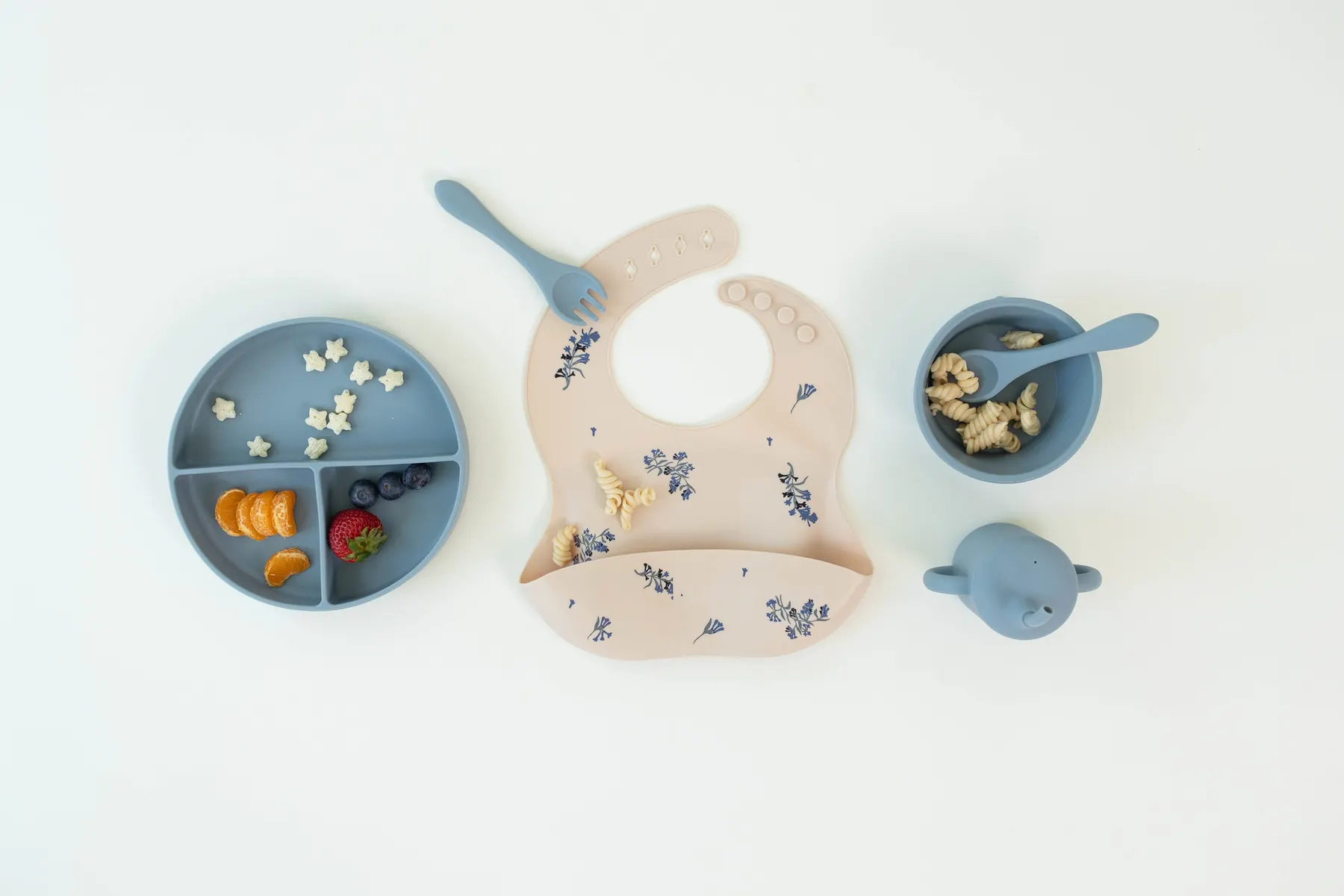
With self-feeding, most food doesn't make it to the mouth — it drops straight down. A pocket across the bottom of the bib is what catches it before it reaches your baby's lap, the high chair seat or the floor.
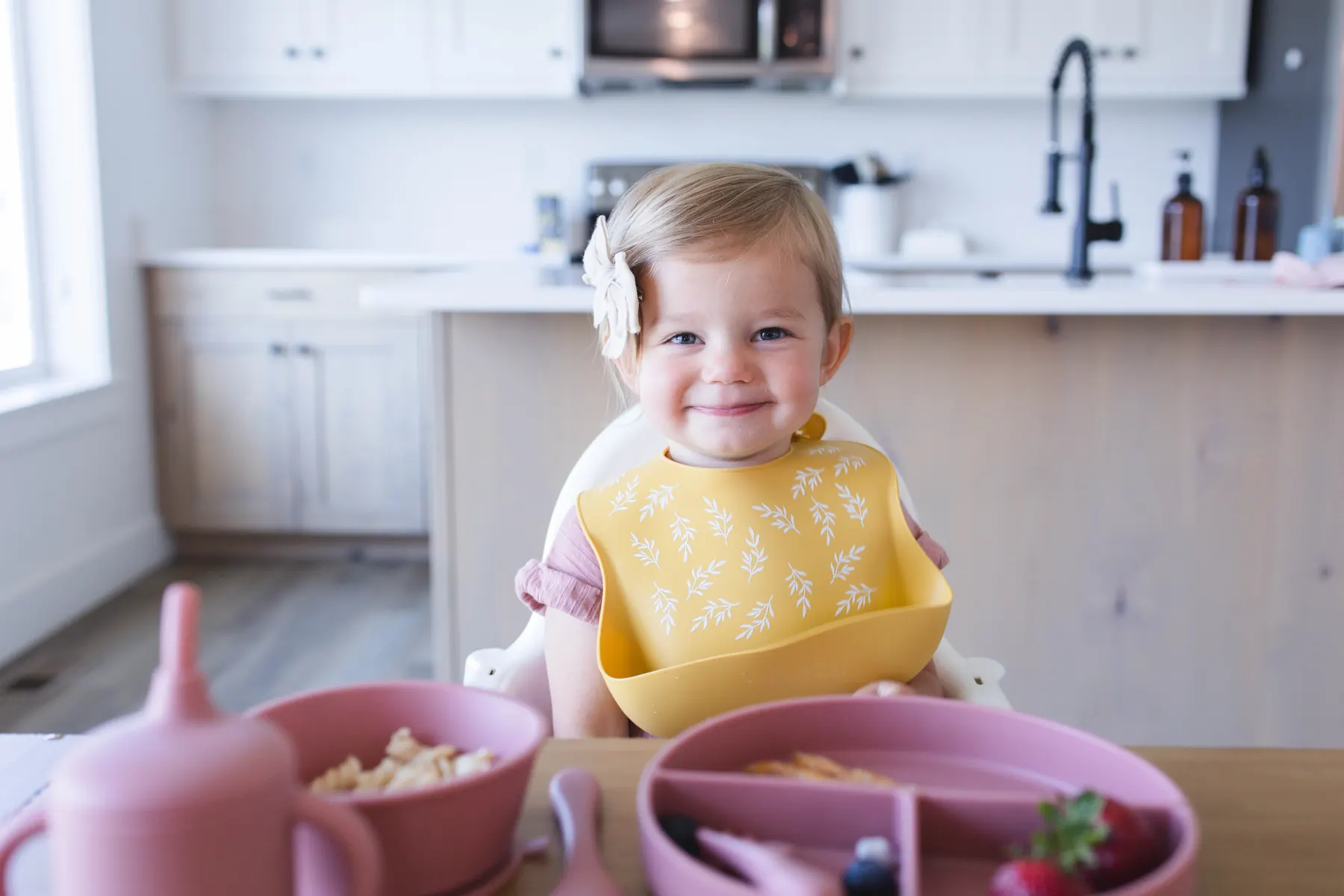
The catch is that a lot of pockets don't stay open. Thin, soft pockets collapse flat against your baby's tummy the moment they lean forward, and then they catch nothing. Look for a pocket that is molded to keep its shape, so it stays propped open by itself through the whole meal. Bonus: babies quickly discover that dropped food lands in the pocket, and many will fish it back out and keep eating.
2. Waterproof and fast to clean
You will be cleaning this bib two or three times a day. Fabric bibs absorb sauces and soak through, which means a wet shirt underneath and a load of laundry. A waterproof material like silicone does neither — it rinses clean under the tap in seconds and can usually go in the dishwasher. When you're doing this every day for the better part of two years, that speed adds up.
3. An adjustable neck that fits now and later
A bib that gapes at the neck lets food slide down inside it; one that's too tight is uncomfortable and gets pulled at. An adjustable closure with several settingslets you get a snug fit for a 6-month-old and keep using the same bib as they grow into a toddler. Snaps tend to hold up better than Velcro, which loses its grip and snags on clothes.
4. Comfortable enough that they keep it on
If a bib is stiff or scratchy around the neck, it will get tugged off mid-meal. The best silicone bibs make the neckband thinner and softer than the body so it contours to the neck, while the pocket stays firm enough to hold its shape.
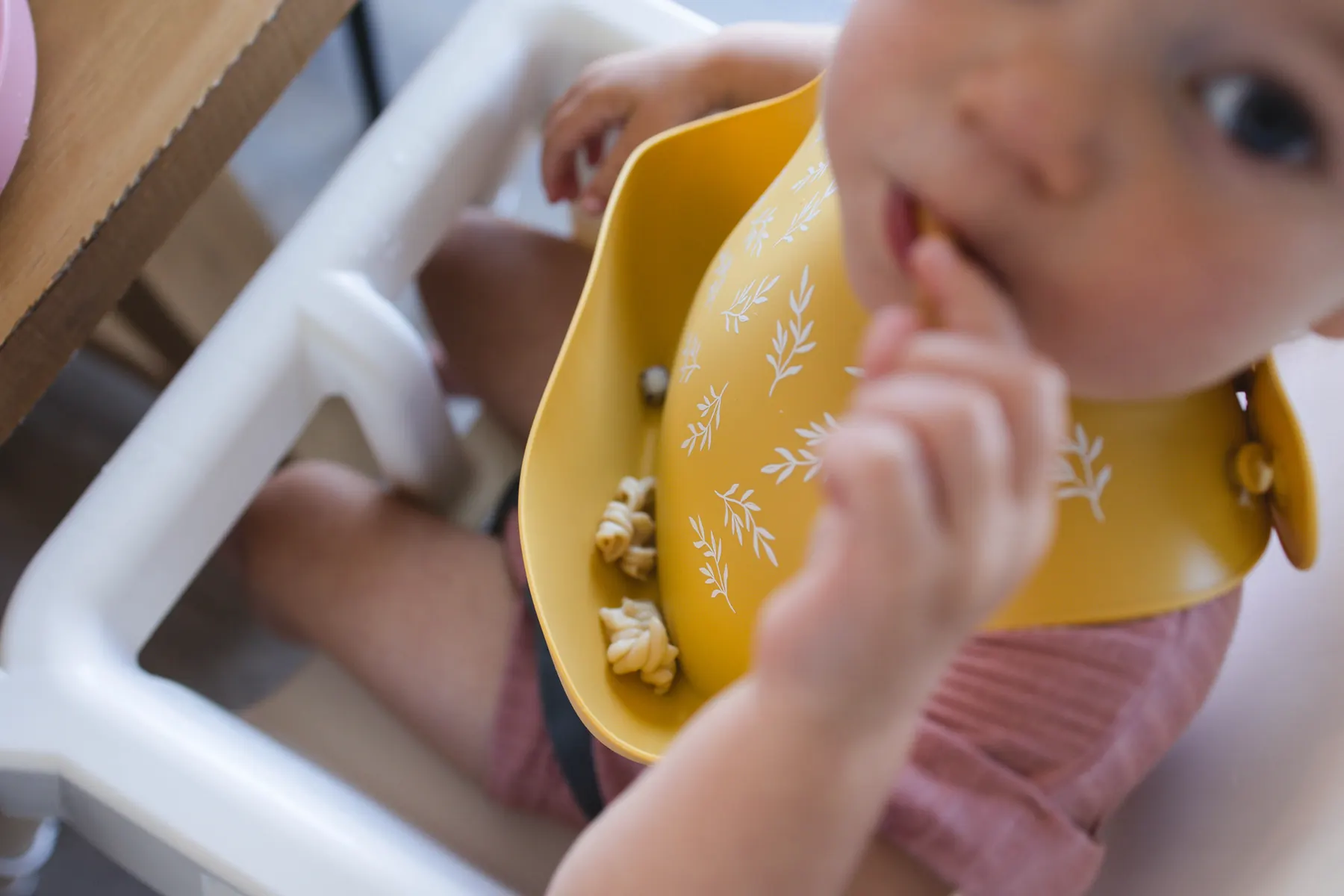
Silicone bib or long-sleeved smock?
Many BLW families end up using both. A silicone bib with a pocket handles most meals and is the fastest thing to clean. A long-sleeved, full-coverage smock protects arms and clothes, which is useful for the truly chaotic foods — think yogurt, spaghetti with tomato sauce or anything involving beets. The trade-off is that smocks are fabric, so they go in the wash after use.
| Situation | Better choice |
|---|---|
| Everyday meals and snacks | Silicone bib with a pocket |
| Very wet or staining foods | Long-sleeved smock (or both) |
| Eating out or traveling | Silicone bib — rolls up, wipes clean on the spot |
| Drool between meals | A soft cloth drool bib (a different job entirely) |
How many bibs do you need?
Two is the practical minimum: one in use, one clean and ready. If you rely on the dishwasher rather than rinsing by hand, three or four saves you from waiting on a cycle before dinner.
A few BLW mealtime habits worth building
- Seat them upright. Babies should eat sitting upright in a high chair, never reclined.
- Stay with them, every meal. Gagging is a normal part of learning to eat; you still want to be right there.
- Put the bib on before the food comes out. It's far easier than wrestling it on mid-meal.
- Check the pocket before you take the bib off. Tip it over the plate or the bin, not your lap.
- Take the bib off once the meal is done. Bibs are for supervised eating only.
Starting solids? Talk to your pediatrician about when your baby is ready and how to prepare foods safely for self-feeding. This guide is about gear, not medical advice.