Baby Bibs by Age: What You Need from 6 Months to Toddler (1–3 Years)
Which bibs babies need at each stage — drool bibs before solids, silicone feeding bibs from around 6 months, and how one adjustable bib can last to age 3.
The short version
- 0–6 months: soft cloth bibs for drool and spit-up. No feeding bib needed yet.
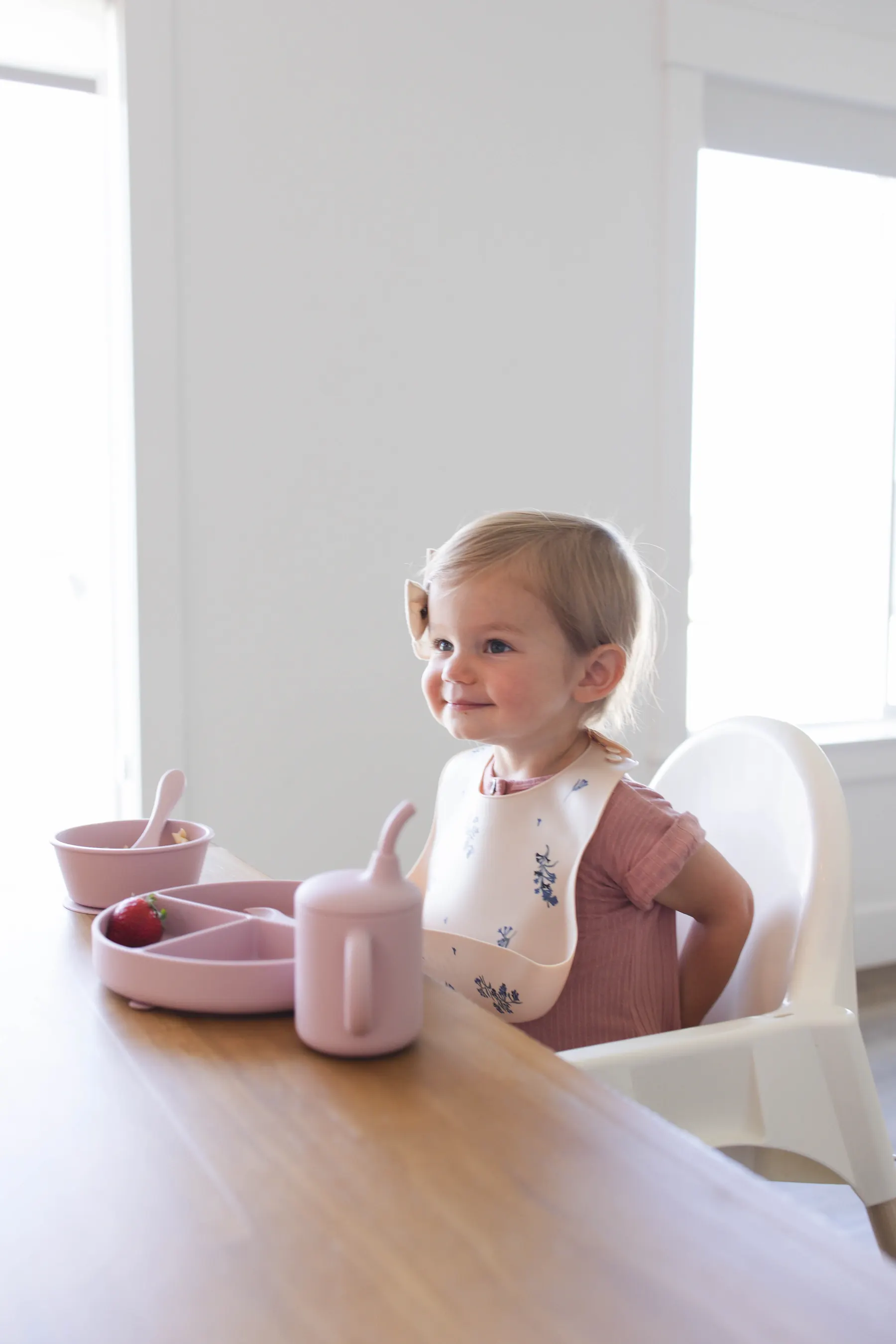
- 6–12 months: solids begin. A waterproof silicone bib with a food-catcher pocket.
- 12–18 months: self-feeding gets serious. Same bib, looser neck setting.
- Toddlers 1–3 years: keep going as long as meals are messy — an adjustable bib still fits.
Bibs don't come in neat age brackets the way clothes do, which is why the same few questions come up again and again: when do babies need bibs, which kind, and when can you stop? Here's what changes at each stage.
0–6 months: drool and spit-up
Before solids, a bib's job is to absorb. Newborns spit up and, from a few months in, many babies drool heavily — especially while teething. Soft cotton or muslin bibs catch the moisture and keep it off clothes and skin. You don't need a silicone feeding bib yet, because there's no food to catch.
Around 6 months: starting solids
Most babies start solid foods around 6 months, when they can sit upright with support, hold their head steady and show interest in food. Your pediatrician can help you decide when your baby is ready.
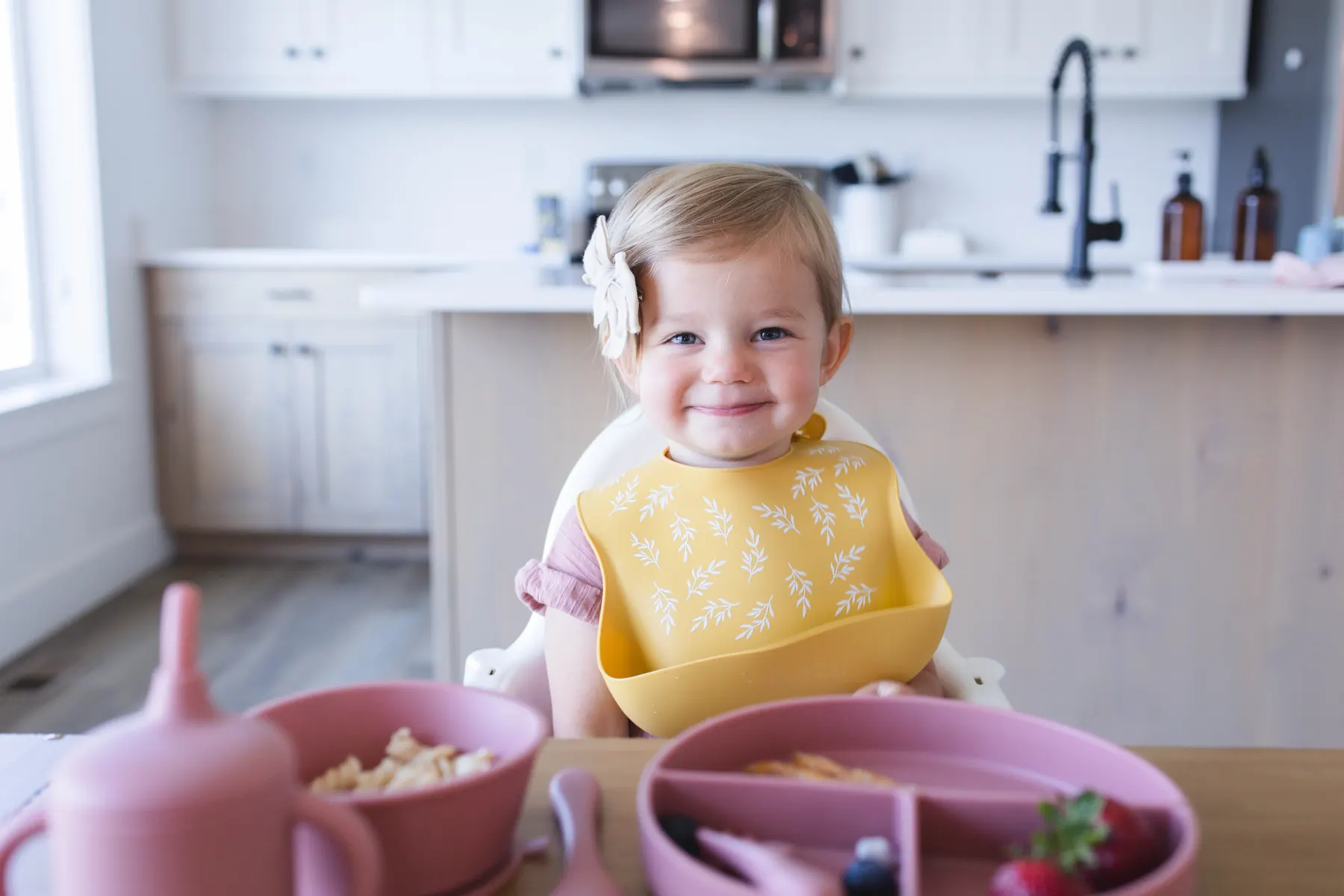
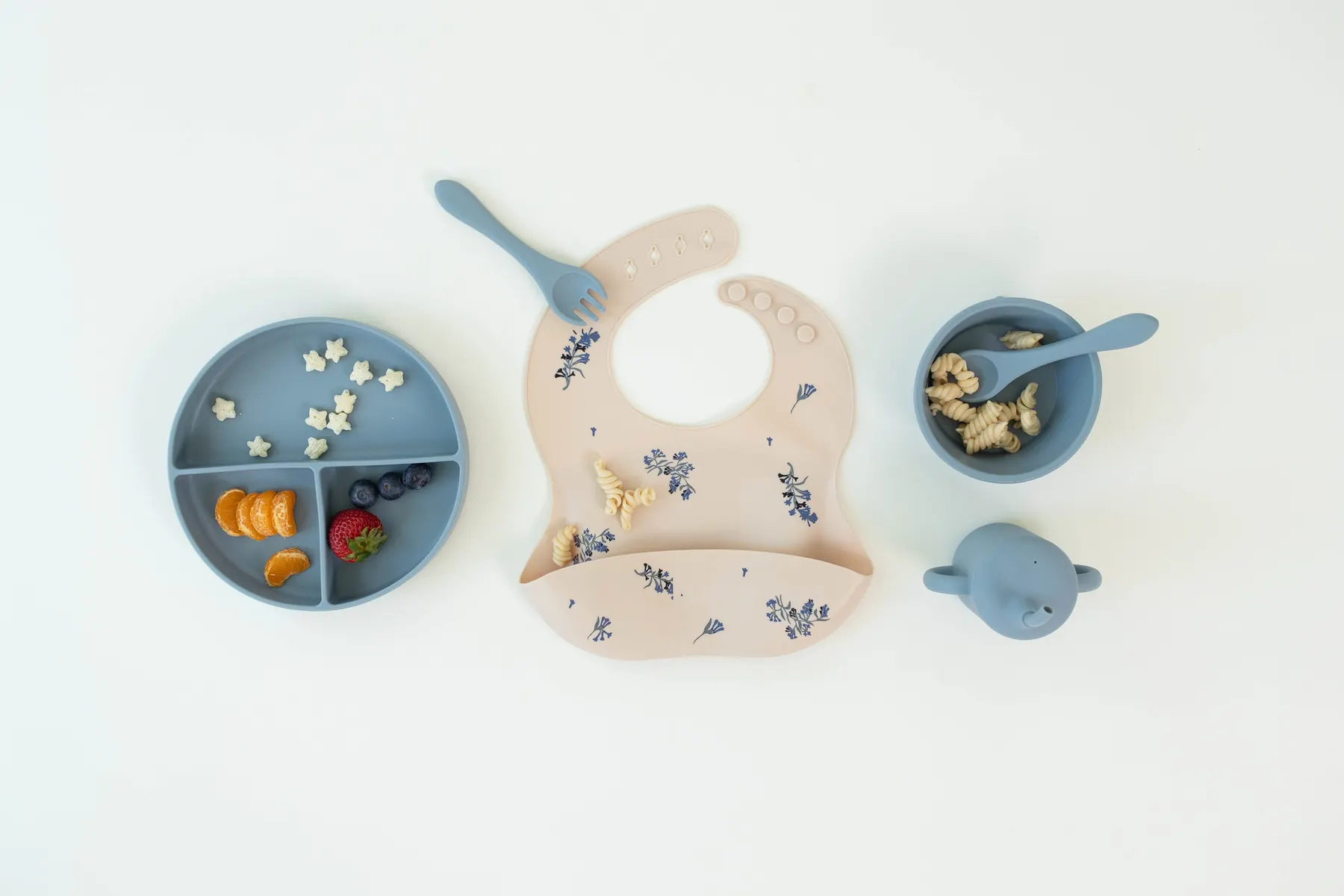
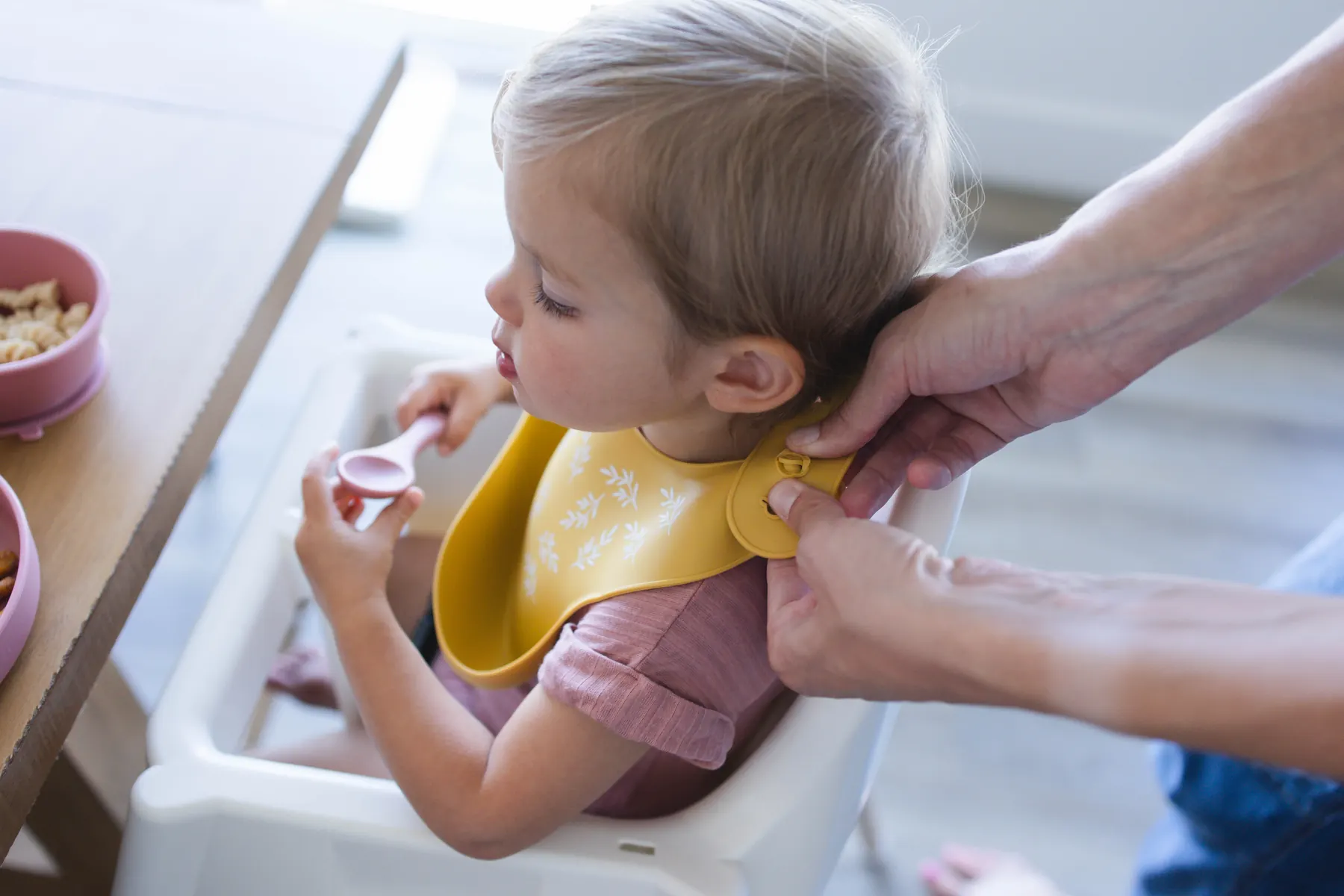
This is the point where a feeding bib becomes genuinely useful. Whether you spoon-feed purées or go straight to baby-led weaning, food ends up everywhere. A silicone bib with a pocket catches it, and rinses clean afterwards rather than adding to the laundry.
What to look for at 6–12 months
- A snug neck setting for a small neck, so food doesn't slide down inside the bib
- A pocket that stays open — young babies lean forward, and floppy pockets collapse
- Food-grade silicone, free from BPA, PVC and phthalates
- A bib that's light and soft enough that your baby doesn't mind wearing it
12–18 months: independent eaters
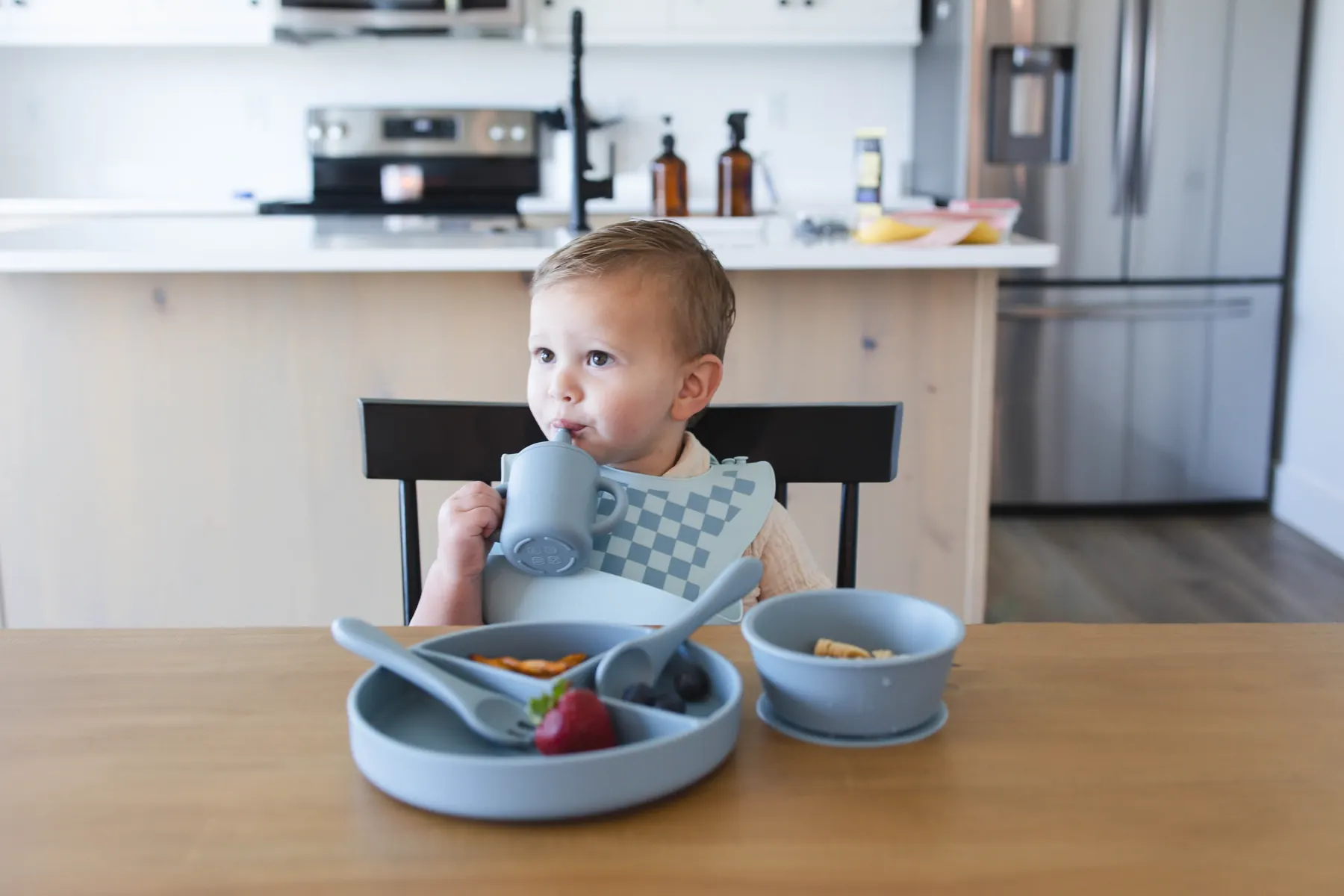
By their first birthday, many babies want to do it all themselves — grabbing the spoon, feeding from their own plate, experimenting with cups. Mealtimes often get messier before they get tidier. The bib that worked at 7 months is still the right tool; you'll just move the neckband out a setting or two as they grow.
Toddlers, 1–3 years: when can you stop?
There's no fixed age. Most families keep using a bib for as long as meals are messy, which for plenty of toddlers is well past age two — and for anything involving spaghetti, longer still. An adjustable bib that fits up to around 36 months means you won't need to buy a bigger size halfway through.
Signs your toddler might be ready to go without: they eat mostly with a spoon or fork, they sit through a meal without wiping hands on their chest, and you're rarely finding food in the pocket. Even then, a bib is handy for restaurants and messy favorites.
Do you need different bibs for each age?
Not if you choose an adjustable one. That's the main advantage of a bib with multiple neck settings: the same bib covers the whole feeding stage, roughly from 4–6 months to 3 years.
| Age | Main job | Best bib |
|---|---|---|
| 0–6 months | Drool, spit-up | Soft cloth bib |
| 6–12 months | First foods | Silicone bib, snug neck setting |
| 12–18 months | Self-feeding | Silicone bib, middle setting |
| 18–36 months | Independent meals | Silicone bib, loosest setting |
Safety at any age: bibs are for supervised mealtimes. Take the bib off when the meal ends, and never leave a baby sleeping or unattended in one.
Related: silicone vs. cloth bibs · bibs for baby-led weaning