Silicone vs. Cloth Bibs: Which Ones Do You Actually Need?
Cloth bibs are for drool; silicone bibs are for eating. A side-by-side comparison of waterproofing, cleaning, comfort and when you need each one.
The short version
- Cloth bibs are for drool. Soft, absorbent and comfortable to wear for hours — ideal for teething.
- Silicone bibs are for eating. Waterproof, with a pocket that catches food, and they rinse clean in seconds.
- Most families end up with both, because they do two different jobs.
Walk down the baby aisle and “bib” covers two very different products. Search Amazon for baby bibs and half the results are soft cotton bandanas; the other half are rubbery silicone bibs with a scoop at the bottom. They aren't competing versions of the same thing. They solve different problems at different stages.
What cloth bibs are good at
Cloth bibs — especially bandana-style muslin or cotton ones — are designed to be worn for long stretches and to absorb moisture. That makes them the right tool for drool, which ramps up during teething and can soak through clothes and irritate the skin on the chin and chest.
- Soft and comfortable enough to wear all day
- Absorb drool and small spit-ups
- Light and easy to layer under a coat or over an outfit
Where they struggle is mealtime. Fabric soaks up sauces rather than shedding them, so food stains set in and wet bibs pass the mess straight onto the shirt underneath. And every use means another item in the laundry.
What silicone bibs are good at
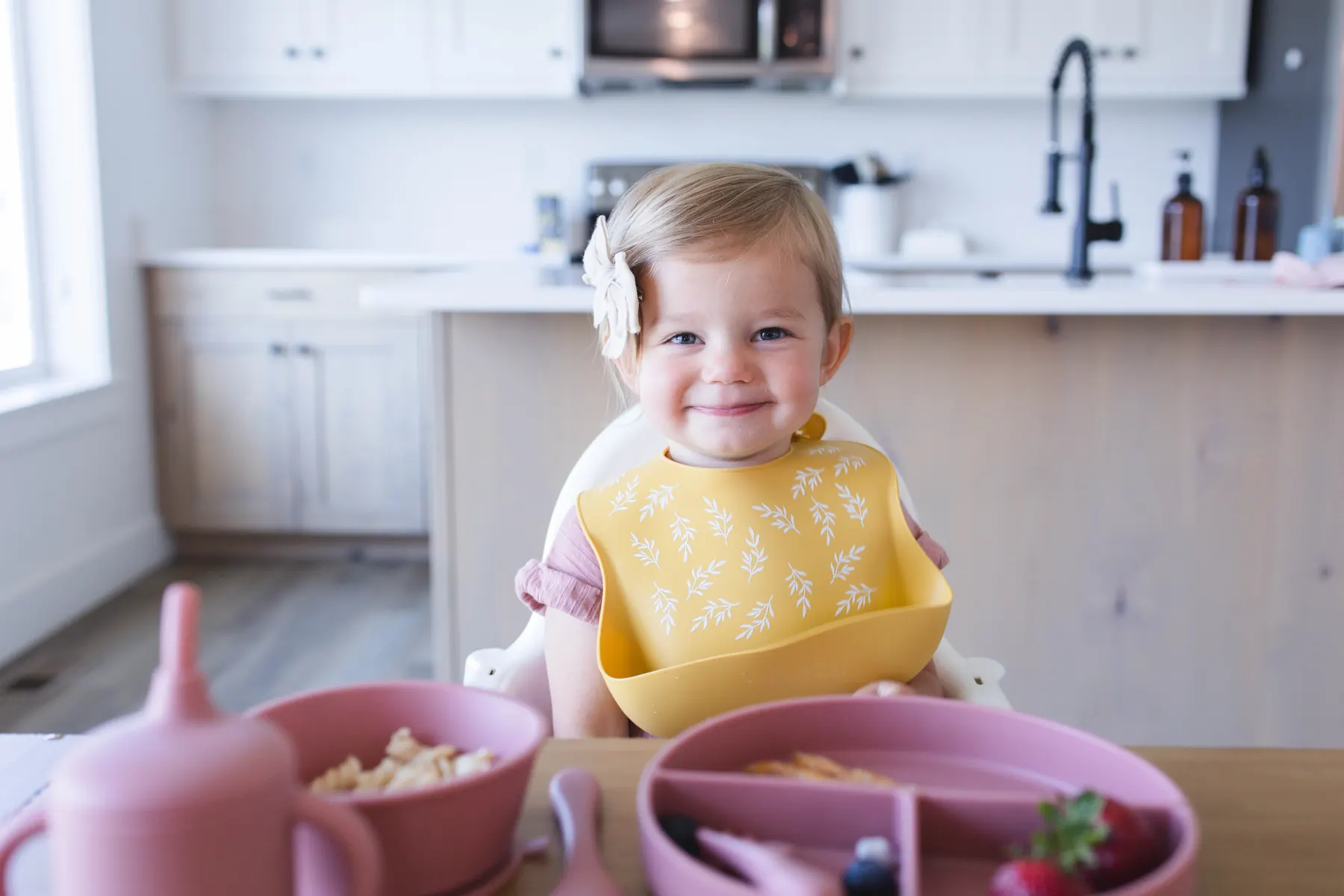
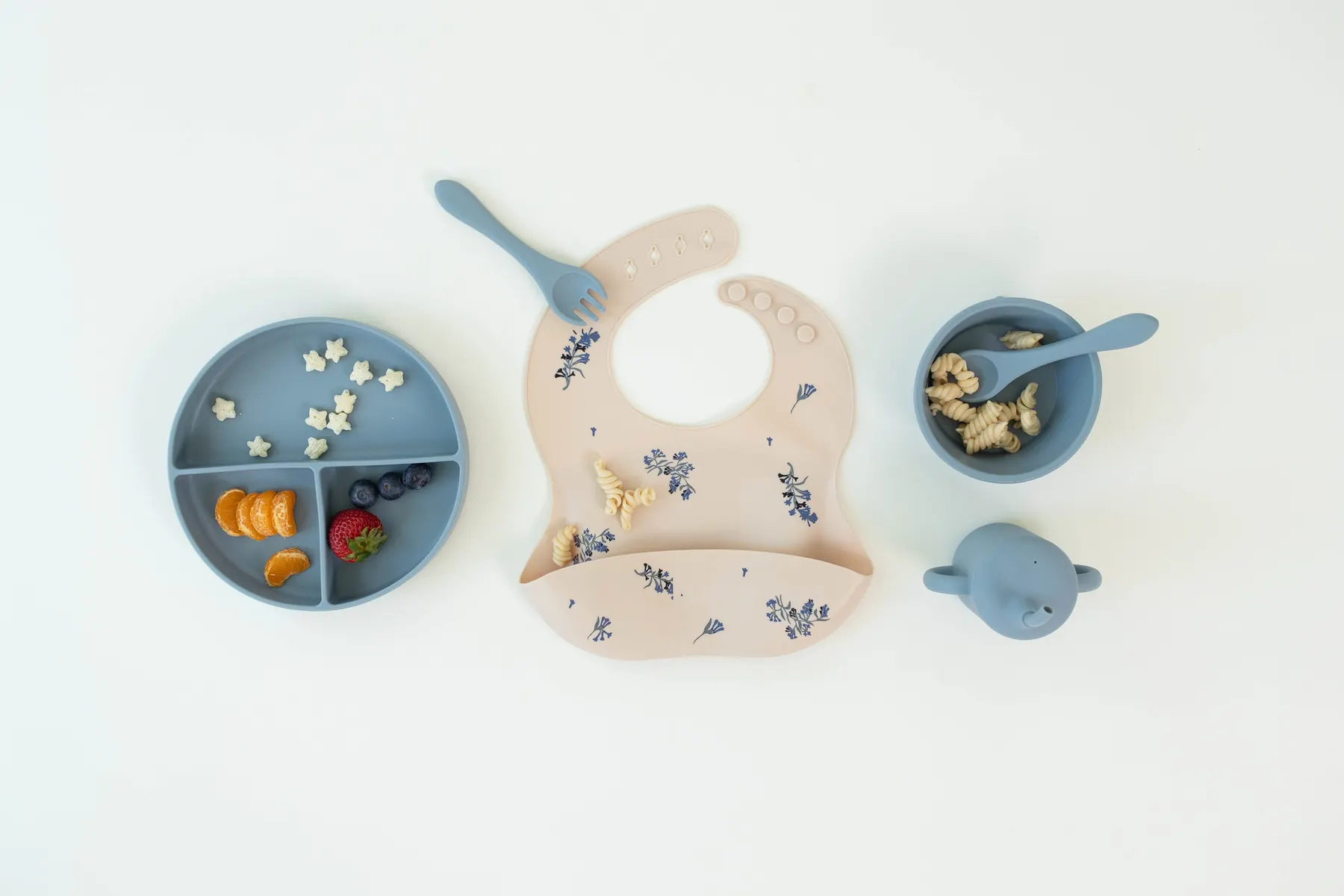
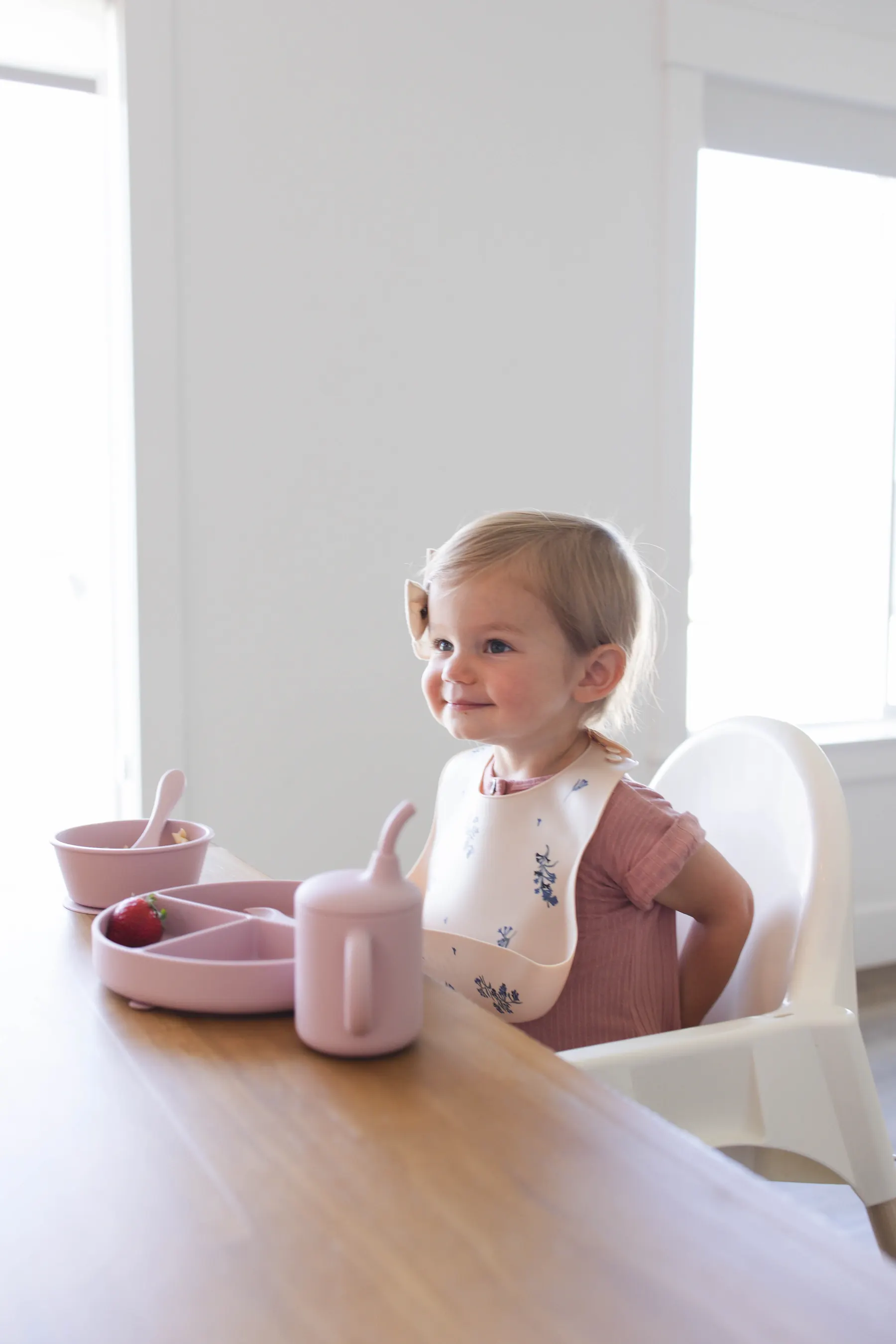
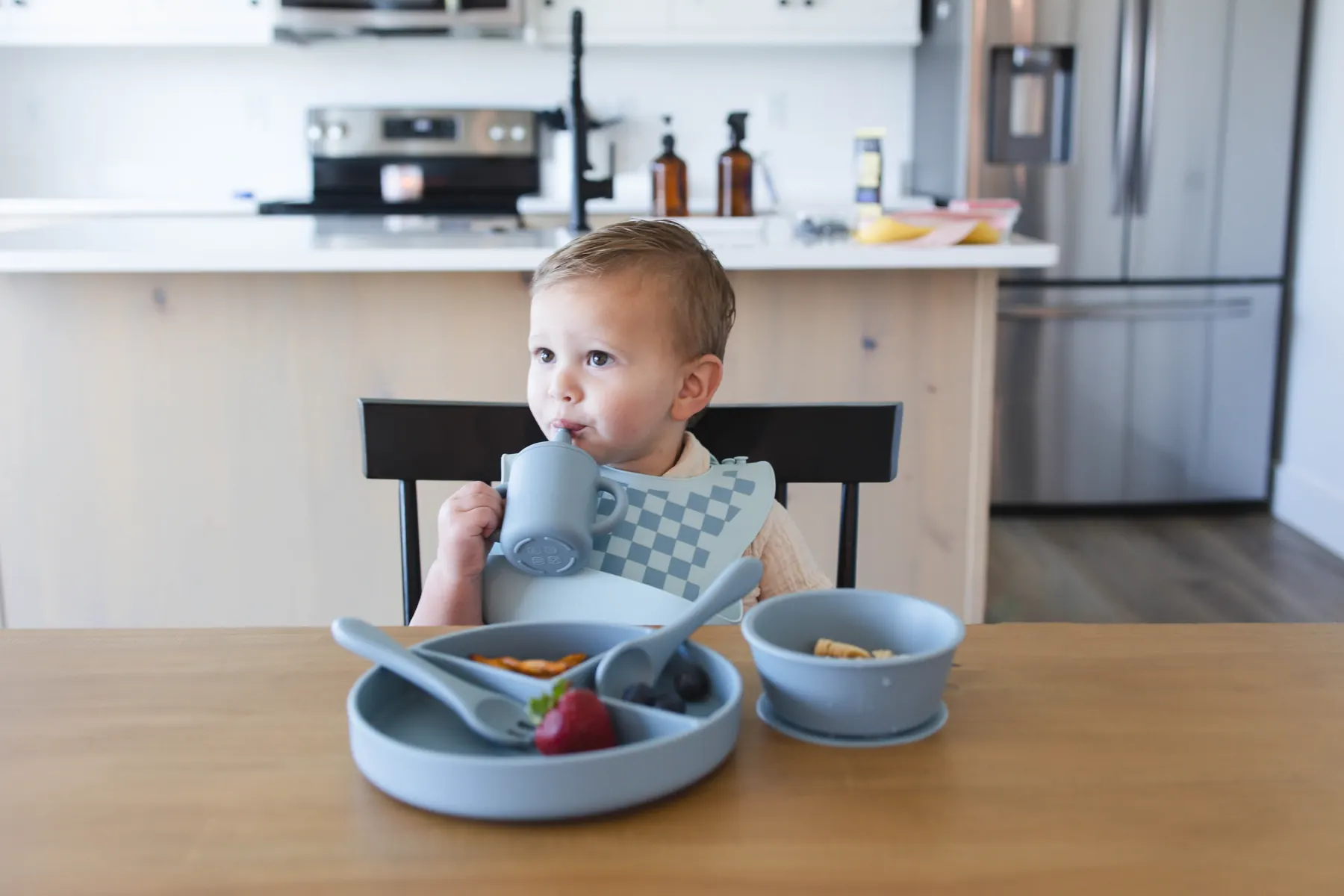
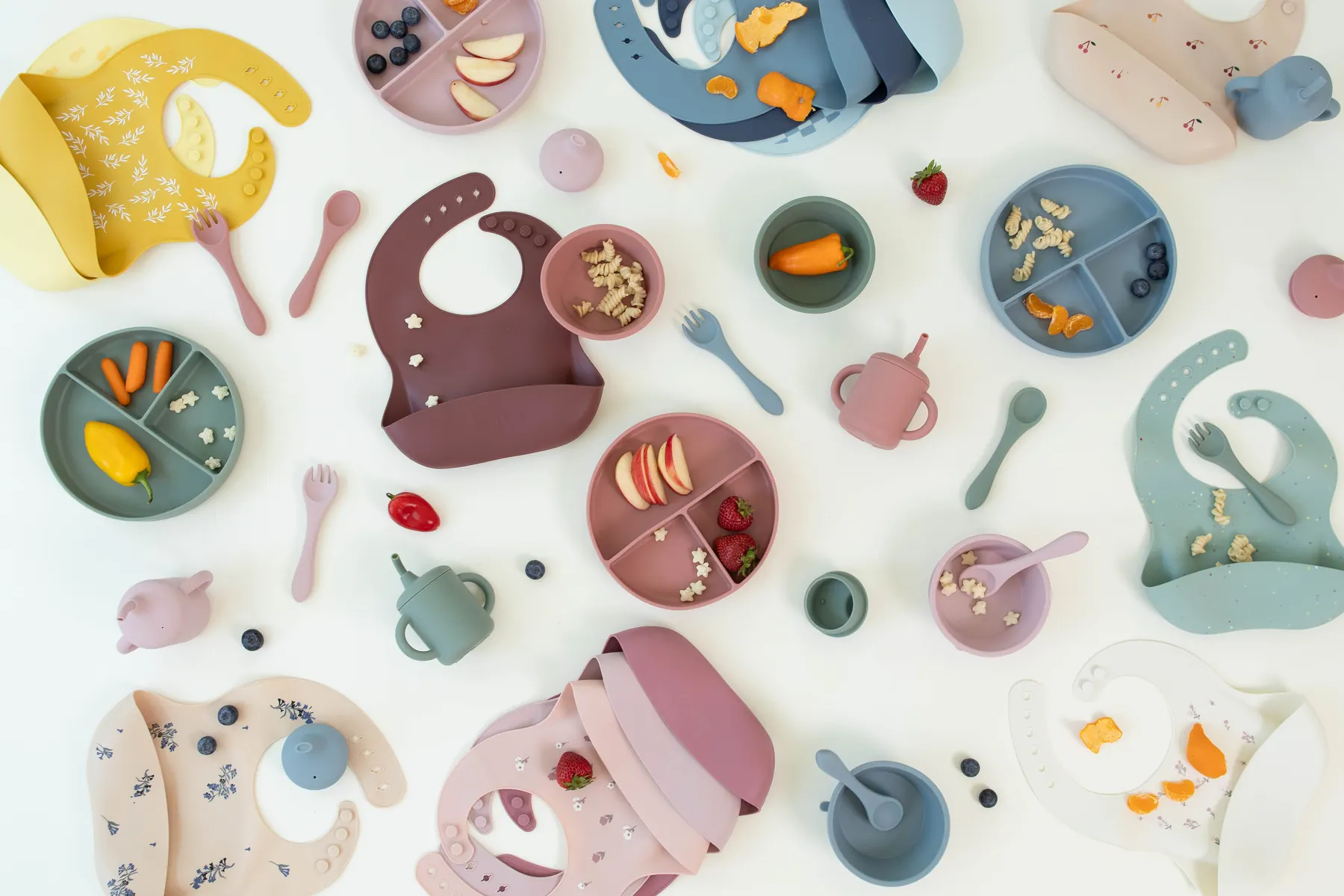
Silicone bibs are built for food. They're fully waterproof, so nothing soaks through, and most have a food-catcher pocket across the bottom that catches dropped food before it reaches your baby's lap or the floor.
- Rinse or wipe clean in seconds; most are dishwasher safe
- Pocket catches crumbs, spills and dropped pieces
- Don't hold on to smells or set-in stains the way fabric does
- Roll up for a diaper bag and can be wiped clean at a restaurant table
They're not meant to be worn all day. Silicone doesn't absorb anything, so it's no help with drool between meals.
Side by side
| Silicone bib | Cloth bib | |
|---|---|---|
| Best for | Meals and snacks | Drool and teething |
| Waterproof | Yes | No (absorbent) |
| Catches food | Yes, with a pocket | No |
| Cleaning | Rinse, wipe or dishwasher | Laundry |
| Stain resistance | High | Low |
| Wear all day | No | Yes |
| Travel | Rolls up, wipes clean anywhere | Light, but needs washing |
When you need which
Before solids (0–6 months)
Cloth drool bibs and burp cloths do most of the work. You don't need a feeding bib yet.
Starting solids (around 6 months)
This is when a silicone feeding bib earns its place. Purées and first finger foods get everywhere, and a pocket plus a quick rinse saves a lot of laundry. Keep the cloth bibs for teething drool between meals.
Toddlers (1–3 years)
Drool usually tapers off, but toddlers are enthusiastic, independent eaters. A silicone bib with an adjustable neck keeps working through this stage — look for one that adjusts across several settings so it still fits a two-year-old.
What to look for in a silicone bib
- A pocket that stays open on its own. If it folds flat, it won't catch anything.
- Food-grade silicone that's free from BPA, PVC and phthalates.
- A soft, adjustable neck with multiple settings, so it's comfortable and grows with your child.
- Dishwasher safe, for the days you don't want to hand-wash.
- A design you like. You'll look at it at every single meal for two years.